How Much Does It Cost to Register a Trademark in the EU?
A registered trademark generally gives its owner exclusive rights to use the protected sign in connection with the goods and services covered by the registration, subject to applicable legal limitations. A trademark in the European Union is a crucial step for businesses that wish to protect their brand identity. Once business owners decide to invest in trademark protection, cost often becomes a key concern. Some applicants begin the registration process without understanding the full costs and later face unexpected expenses.
In this article, we will explain the cost of trademark registration in the EU. We will describe the factors affecting the overall cost. Furthermore, we will recommend an expert platform, TrademarkHost, for affordable trademark registration and management services.
What is Trademark Registration in the EU?
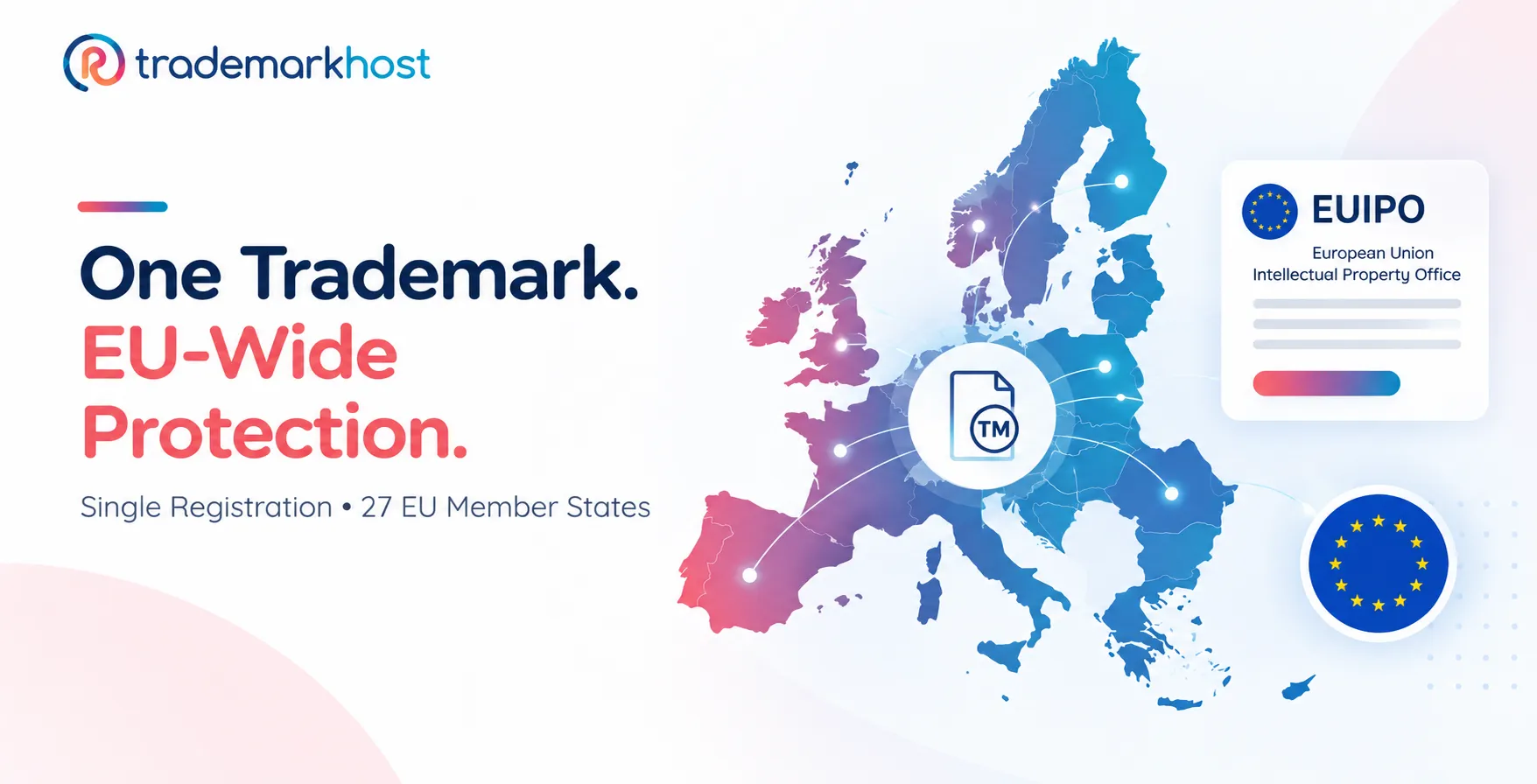
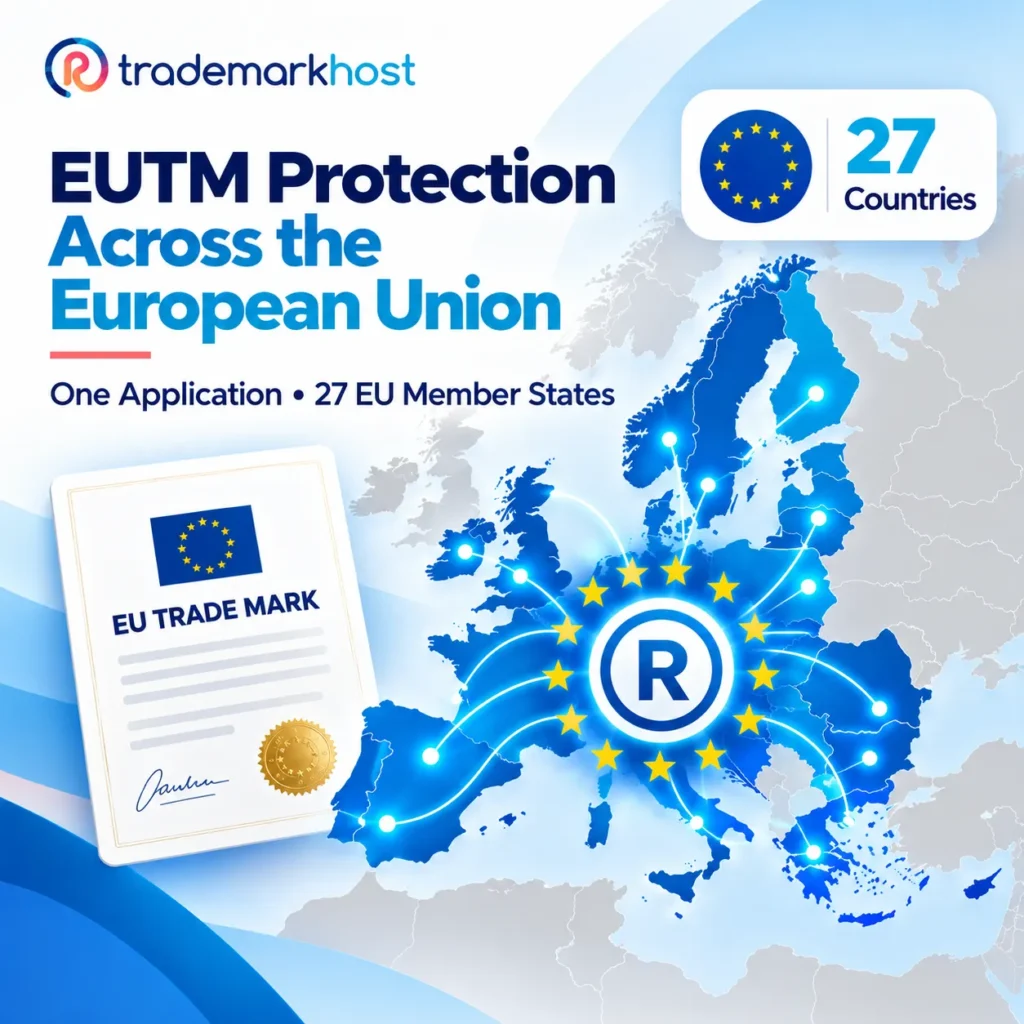
Trademark registration is the legal process of protecting a sign that distinguishes your goods or services from those offered by other businesses. A trademark registered in the EU is known as a European Union Trade Mark (EUTM). A successful EUTM registration provides unitary protection across all 27 EU member states through a single registration. This centralized system may be more cost-effective than filing separate applications in multiple EU countries.
The European Union Intellectual Property Office (EUIPO), which is headquartered in Alicante, Spain, processes EUTM applications. EUIPO examines whether an application meets formal and absolute legal requirements. Once the application is published, owners of earlier rights may file an opposition during the applicable opposition period. If no successful opposition is filed, the trademark may proceed to registration. An EUTM is valid for ten years and can be renewed indefinitely for additional ten-year periods.
What are the Factors Affecting the Cost of Trademark in the EU?
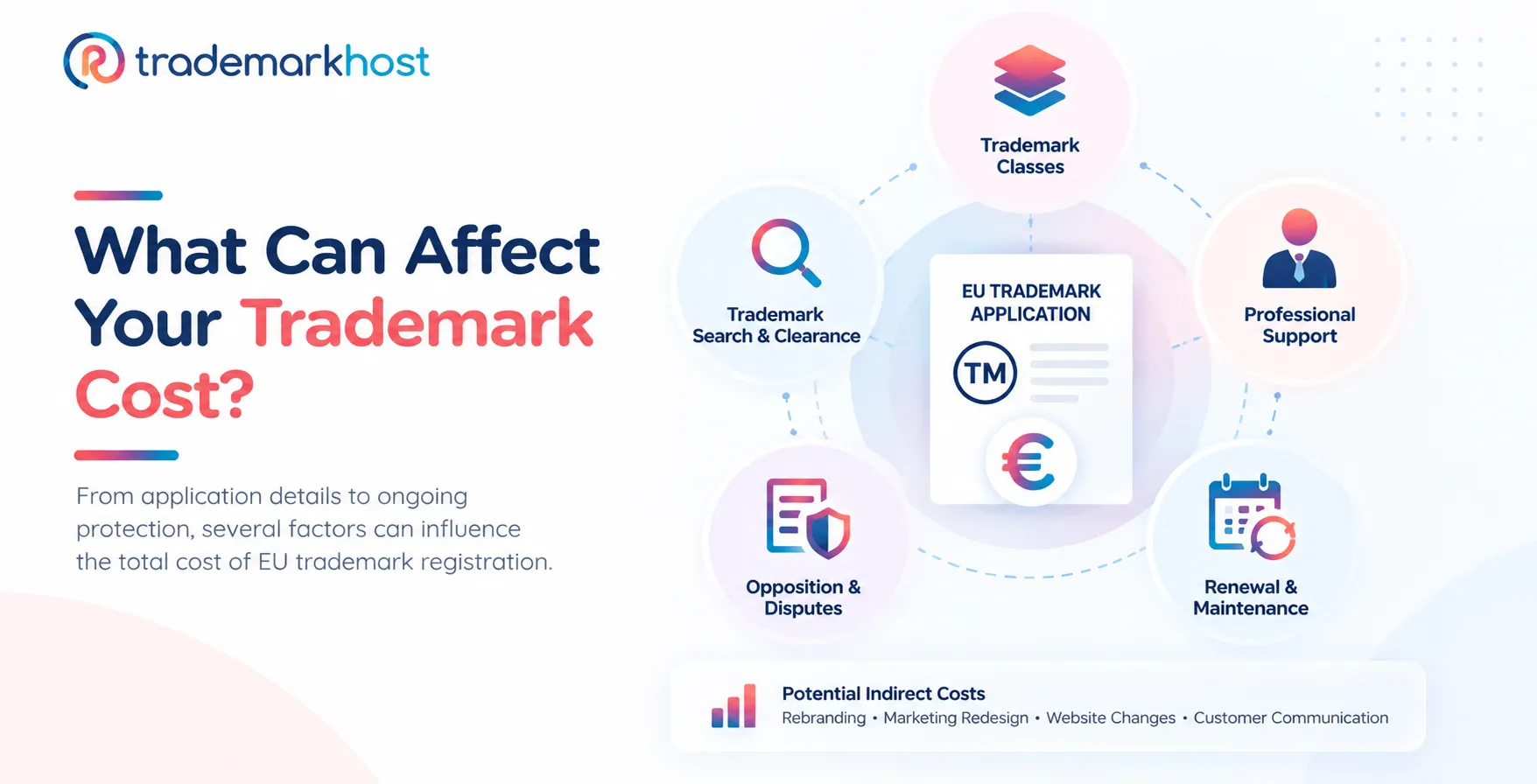
The total cost of trademark registration in the European Union varies depending on several factors. These factors determine the likely cost of filing, examination, registration, and ongoing protection.
Let us explain the factors that determine the trademark cost in the EU:
The Nice Classification System
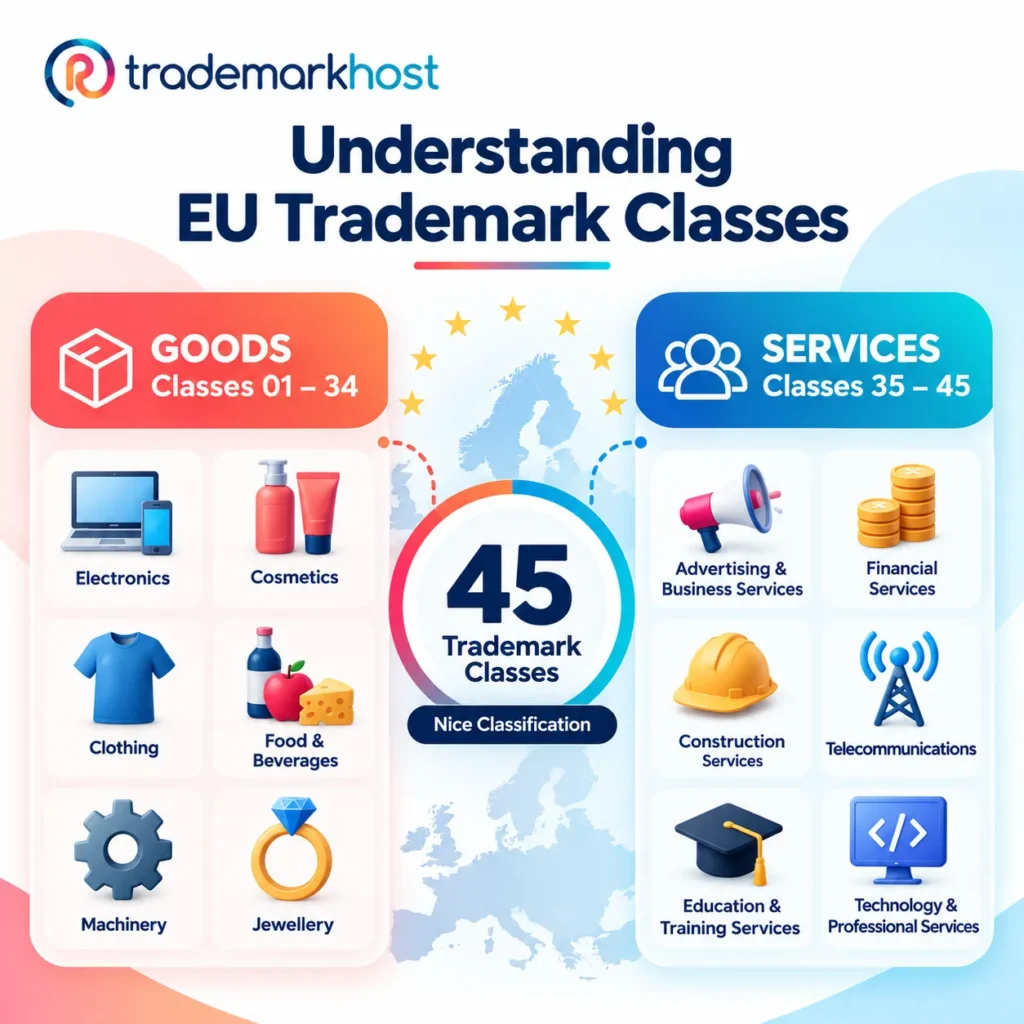
The Nice Classification is an international system that organizes goods and services into trademark classes.
It includes:
- 34 goods classes
- 11 service classes
Adding more classes may increase the overall cost of an EU trademark application. Choosing an incorrect class or an unsuitable description of goods and services may lead to examination issues, inadequate protection, or the need for a new application.
Professional Support and Legal Fees
Many business owners seek assistance from trademark attorneys or professional representatives. These professionals can manage the application process, but their services involve additional fees. They may also provide legal support if EUIPO raises an objection or a third party opposes the application.
Services can include:
- Legal consultation
- Application drafting
- Objection handling
- Trademark Monitoring services
Professional fees depend on the complexity of the application, the representative’s experience, and the scope of services provided. The cost can range from a few hundred to several thousand euros, increasing the overall cost of trademark registration in the EU.
Trademark Search and Clearance Costs
A trademark search is important before filing your application. Professional trademark search providers usually charge separate fees for clearance and availability searches. Applicants can use free databases for an initial screening of existing trademarks. Professional searches provide a more detailed analysis and may reduce the risk of costly conflicts.
A thorough search can help identify potential conflicts and reduce the risk of avoidable objections, oppositions, rebranding, and related legal expenses.
Opposition and Dispute Expenses
Objections, refusals, and opposition proceedings can increase the overall cost of registration.
If a third party files an opposition against your trademark application, the costs may include:
- Legal representation
- Evidence preparation
- Negotiations
All these steps may require an additional budget. Moreover, costs may also increase when legal representatives handle objections, oppositions, or negotiations. Some disputes end through settlement agreements, which may involve additional professional fees.
Renewal and Maintenance Costs
Regular monitoring can help identify potentially conflicting applications or unauthorized use of the trademark. For this reason, some trademark owners invest in monitoring, renewal, and portfolio-management services. Usually, experts may charge additional fees for managing renewals and maintaining trademark portfolios.
Additionally, infringement proceedings may also contribute to the long-term cost of owning and protecting an EU trademark.
Rebranding Risks
EUIPO may object to or refuse a trademark if it does not meet legal registration requirements. If the objection cannot be overcome, the business may need to modify or replace the brand, which can create substantial rebranding costs.
These indirect costs can be:
- Repackaging
- Marketing redesign
- Website updates
- Customer communication
How Much Does EU Trademark Registration Cost?
The total cost of EU trademark registration depends on several factors, including the scope of services required, the number of classes, professional assistance, searches, and any objections or disputes that may arise.
A realistic budget for a standard EU trademark application may include:
- Trademark application services
- Trademark Search Services, where required
- Professional support for filing, monitoring, renewals, and objections
- Additional costs depending on the complexity of the application and the services required
The total cost may vary depending on the specific requirements of each trademark application. A professionally managed application provides support throughout the registration process and may help businesses avoid classification errors, incomplete filings, and other issues that can create additional costs.
How Do EU and National Trademark Costs Compare?
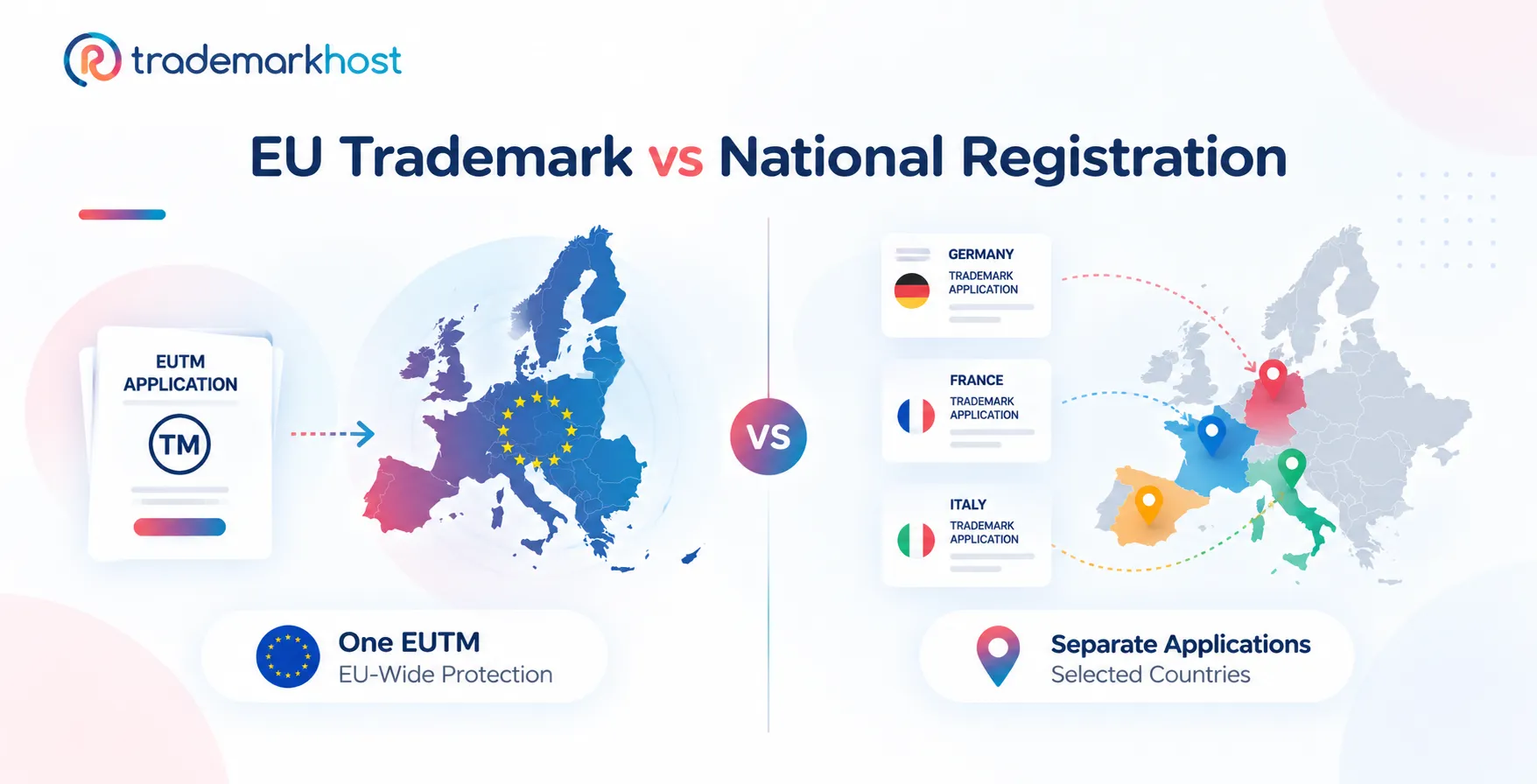
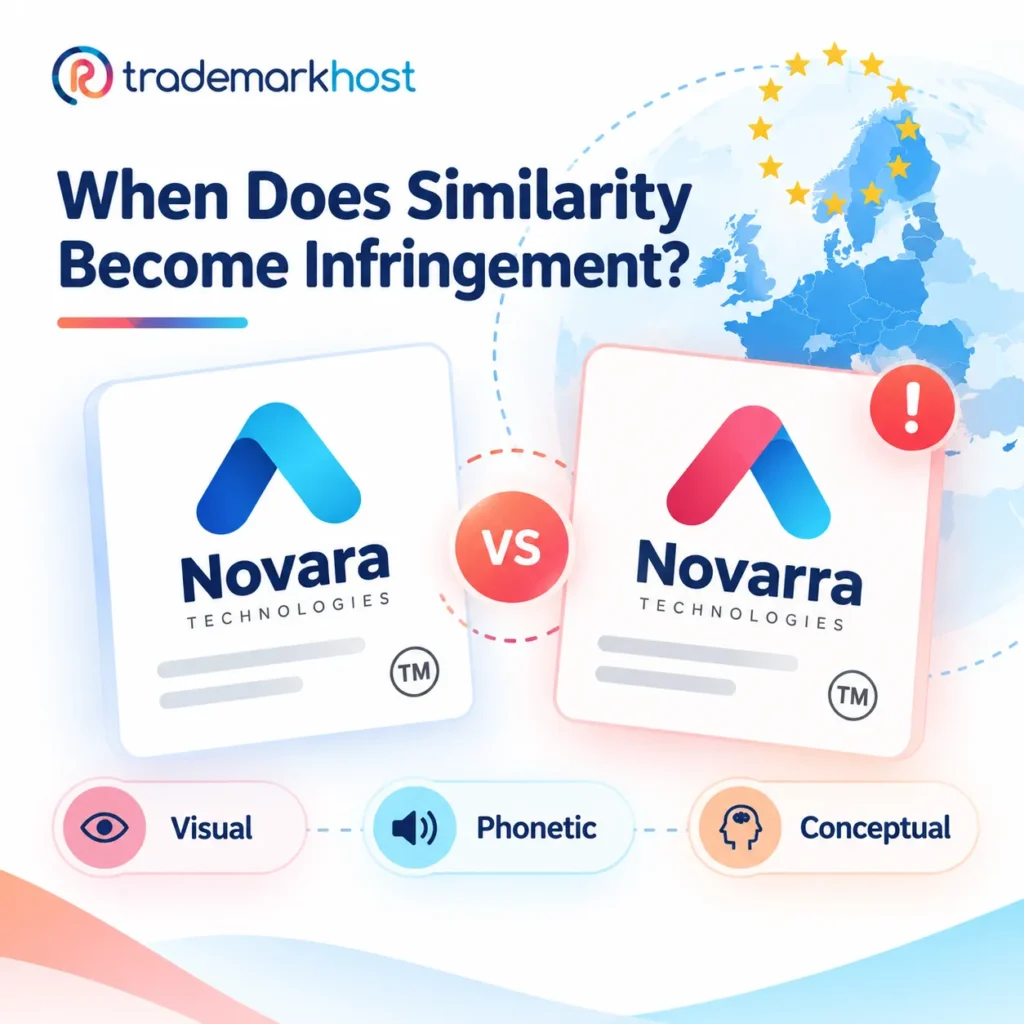
Filing separate national applications requires separate fees in each selected jurisdiction and may become more expensive than an EUTM when protection is required in several EU countries. On the other hand, EU Trademark registration provides protection across all EU member states.
An EUTM is a unitary right, which means that it applies across the European Union as a whole. While this broad coverage can be beneficial, an earlier conflicting right in one EU member state may affect the application or registration throughout the EU.
An EUTM may be more economical for businesses seeking protection in several EU countries. However, national registrations may be more suitable where protection is required in only one or a small number of countries. An EUTM may be more economical for businesses operating in several EU countries, although the best option depends on national fees, legal risks, and commercial plans.
How Does TrademarkHost Assist in Reducing Cost for Trademark Registration?
Businesses seeking professional support with EU trademark registration may consider working with an experienced trademark service provider. TrademarkHost provides trademark application, search, renewal, monitoring, and portfolio-management support across multiple jurisdictions.
TrademarkHost supports trademark matters in several jurisdictions, including:
- EU-wide trademark applications filed with the European Union Intellectual Property Office
- U.S. trademark applications filed with the United States Patent and Trademark Office
- Trademark application support for China, the UAE, and Australia, subject to local laws and representation requirements
Services may include trademark searches, application support, filings, renewals, monitoring, objection assistance, and portfolio management, subject to the jurisdiction and the scope of the engagement.
Professional guidance may help applicants avoid classification errors, incomplete filings, missed deadlines, and other issues that can create additional costs.
Our services are designed to support long-term brand protection and effective trademark management.
Conclusion
In conclusion, the cost of trademark registration in the EU depends on filing fees, the number of classes, professional support, searches, and any objections or disputes that arise. The total cost varies depending on the services required and the complexity of the application.
Rather than viewing trademark cost as a short-term expense, businesses should consider it a long-term investment. A carefully planned trademark application can help protect valuable brand assets, support expansion across the EU, and reduce avoidable filing and clearance risks.
Contact TrademarkHost to discuss available trademark registration and support services. We provide trademark support that helps businesses protect, manage, and maintain their brands.
FAQs
What factors determine the cost of an EU trademark registration?
The total cost of an EU trademark application depends on factors such as the number of classes, required services, professional support, and the complexity of the application.
Which organization manages EU trademark registrations?
All EU trademark applications are handled by the European Union Intellectual Property Office (EUIPO).
Does one EU trademark cover all EU member states?
Yes. A registered EUTM provides unitary protection across all 27 EU member states for the goods and services covered by the registration.
Can I file an EU trademark application myself?
Yes. Applicants may file an EUTM application themselves. However, professional support may help with trademark searches, classification, drafting, and responding to objections or oppositions.
Do additional trademark classes affect the cost of EU trademark registration?
Yes. The total cost may vary depending on the number of trademark classes required and the specific services included in the application.