What Are EUTM Countries? A Complete List and Explanation
If you’re planning to protect a brand in Europe, understanding EUTM countries is one of the first things you need to know. The European Union Trade Mark (EUTM) system allows a single trademark registration to protect multiple countries at once. Instead of filing separate applications in each country, a single application through the European Union Intellectual Property Office (EUIPO) can cover the entire European Union.
This system simplifies trademark protection and creates a unified legal framework across Europe. It also allows businesses to manage their trademarks more efficiently, especially when operating in multiple countries.
However, to use this system effectively, it is important to understand exactly which countries are included and how the structure works in practice.
What are the EUTM countries?
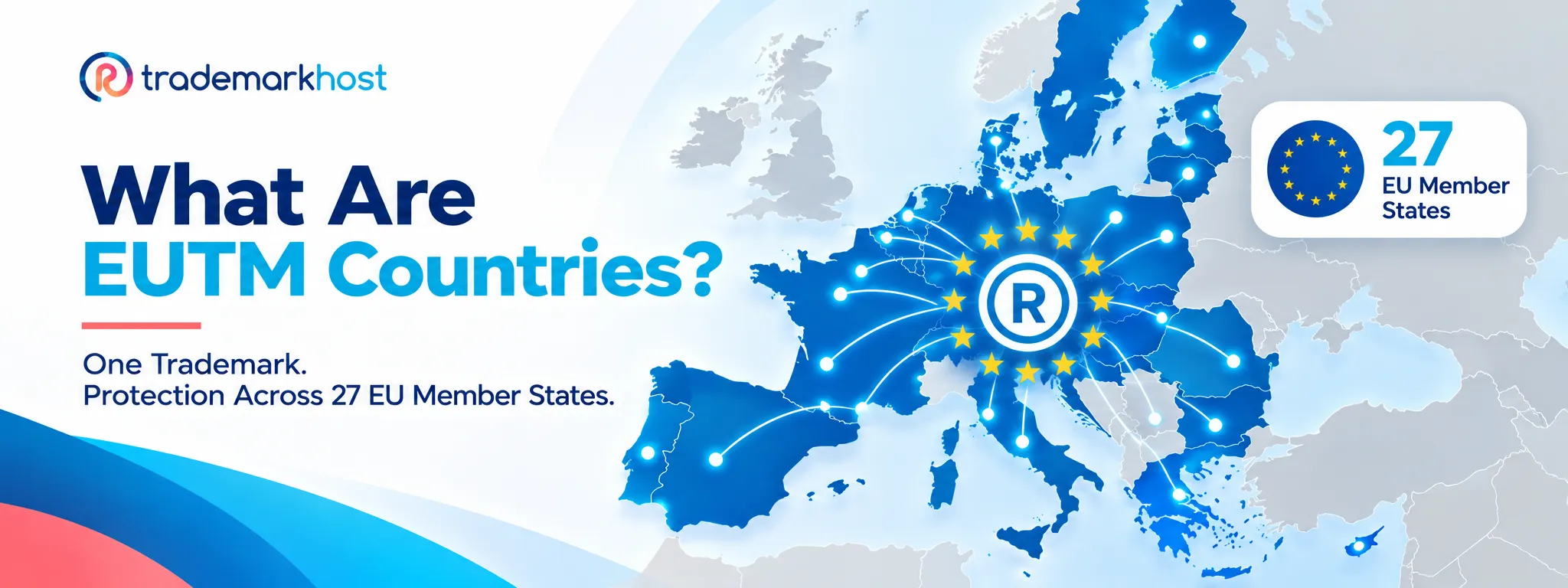
EUTM countries refer to the 27 EU Member States in which a single European Union trade mark registration has effect.
When a trademark is registered through EUIPO, the rights extend automatically across all of these countries. There’s no need to file separate applications in each one, which makes the system so efficient.
From a legal standpoint, these countries are the EU Member States covered by the EUTM system. They are sometimes informally referred to as ‘EUTM countries’ or ‘EUTM member states,’ although the formal legal term is ‘EU Member States’.
Here is the complete EUTM countries list:
- Austria
- Belgium
- Bulgaria
- Croatia
- Cyprus
- Czech Republic
- Denmark
- Estonia
- Finland
- France
- Germany
- Greece
- Hungary
- Ireland
- Italy
- Latvia
- Luxembourg
- Malta
- Netherlands
- Poland
- Portugal
- Romania
- Slovakia
- Sweden
- Slovenia
Each of these is a recognized member state of the European Union, and all are included in the EUTM system. This list forms the foundation of EU-wide trademark protection.
How does the European Union trademark system work?
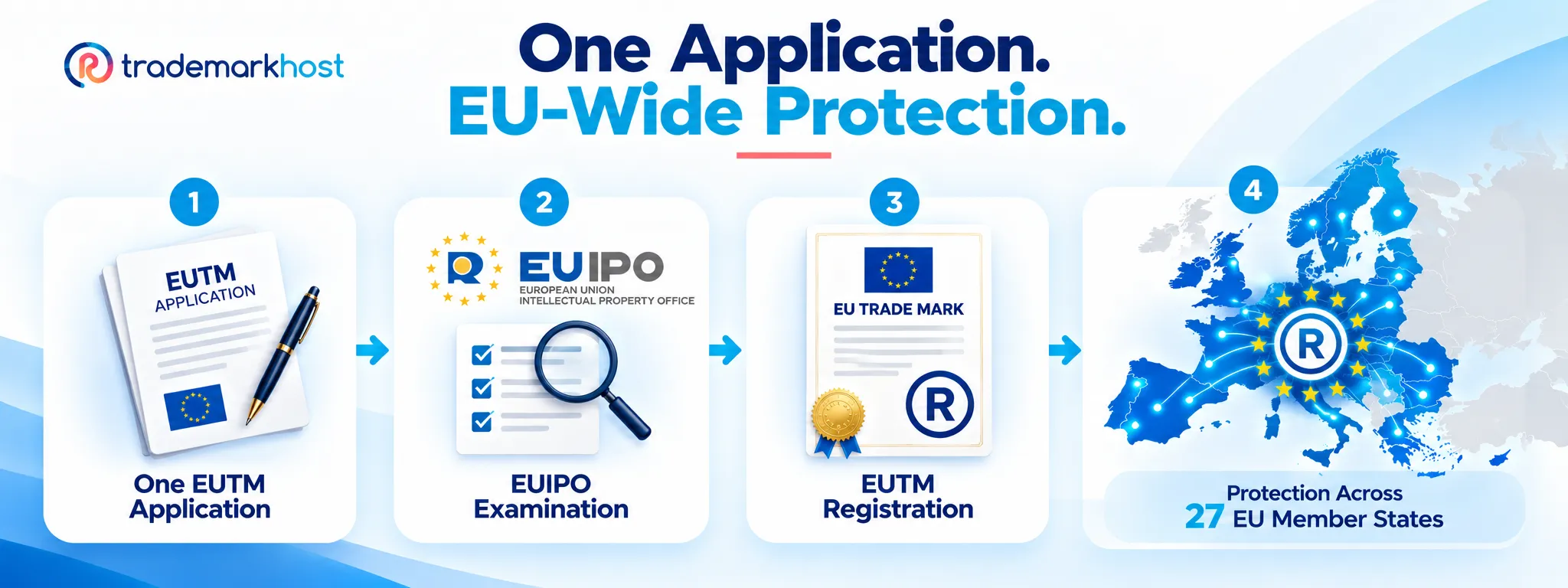
The EUTM system allows a single trademark application to cover all EU countries under one legal framework.
The process is handled centrally by the EUIPO. When a business files an application, it is examined under EU trademark law rather than the laws of individual countries.
If the application meets the requirements and faces no successful opposition, the trademark is registered and becomes enforceable across the EU.
Instead of managing multiple national filings, businesses handle everything through a single system.
Key aspects of the system include:
- A single application submitted through EUIPO
- Centralized examination and registration
- Protection that applies across all member states
- Registration for 10 years, renewable indefinitely for successive 10-year periods
This makes the system efficient and scalable. It is especially useful for companies planning to operate in multiple European markets at the same time.
What countries are covered by EUTM?
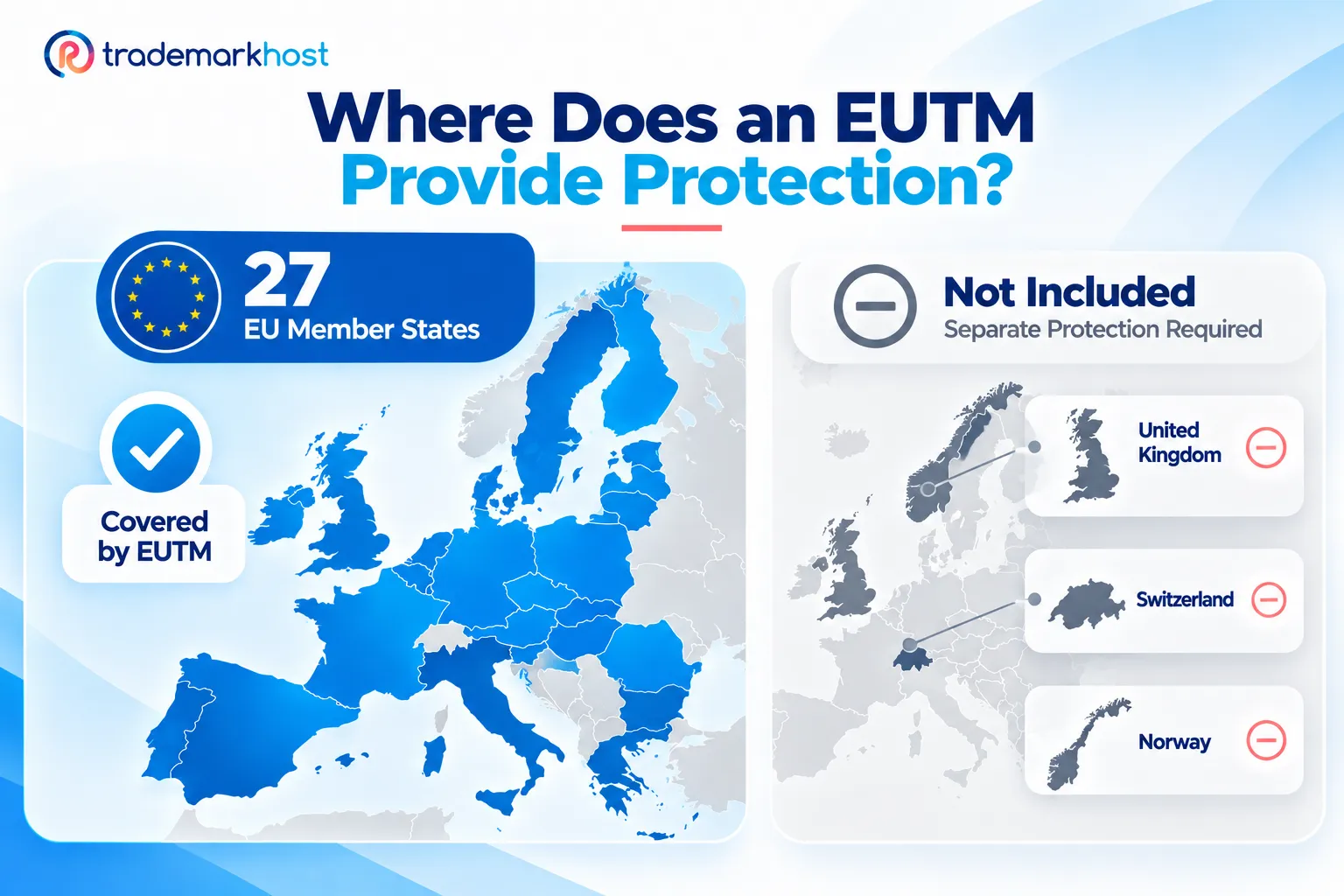
The EUTM provides protection throughout all 27 EU Member States. It does not provide EUTM protection in countries outside the European Union.
This is an important distinction. The EUTM system is strictly limited to EU members. If a country is not part of the European Union, it is not included in the system.
For example:
- The United Kingdom is no longer within the territorial scope of the EUTM following Brexit
- Switzerland is not part of the system
- Norway is also excluded
This means businesses targeting both EU and non-EU European markets must plan their filings carefully. Many companies mistakenly assume Europe is one legal region, but trademark protection does not work that way.
Understanding the boundaries of EUTM trademark countries helps avoid gaps in protection.
Why are EUTM countries important for businesses?

The EUTM system is important because it allows businesses to secure broad trademark protection with a single filing.
Europe is not a single trademark jurisdiction. Within the European Union, however, businesses operate across the EU Single Market, and the EUTM provides unitary trademark protection across all EU Member States. A business that starts in one country often expands into others quickly, especially in digital commerce.
Without an EU-wide filing route, businesses seeking trademark protection in multiple EU Member States may need to rely on national, regional, or international filing routes, which can involve greater cost and administrative complexity depending on the filing strategy.
The EUTM system solves this problem by offering:
- Wide geographic coverage across 27 countries
- Simplified filing and administration
- Unitary trademark protection across the EU
- Easier enforcement across borders
This is particularly valuable for startups, e-commerce brands, and technology companies that operate across multiple regions from the beginning.
What are the advantages of registering in EUTM countries?
The main advantage is obtaining trademark protection across the EU through one application.
This creates both financial and operational benefits. Businesses can focus on growth instead of managing complex legal processes in multiple jurisdictions.
Key advantages include:
Cost efficiency
One EUTM application can be more cost-effective than filing multiple separate national applications
Centralized management
All updates and renewals are handled in one place
EU-wide protection
An EUTM has effect throughout all EU Member States
Business expansion support
Ideal for scaling across Europe
Because of these benefits, many companies research the countries covered by EUTM before entering the European market.
Are there any limitations to the EUTM system?
Yes, the EUTM system has limitations, mainly due to its unitary structure.
The most important limitation is that the system works on an “all or nothing” basis. Because an EUTM has a unitary character, a ground for refusal arising in part of the EU, or a successful opposition based on an earlier right in a Member State, can prevent registration of the EUTM as a whole.
This creates certain risks:
- A refusal or successful opposition can affect the entire EUTM application
- There is no option to select individual countries
- Legal challenges in one region can have wider consequences
If an EUTM application is refused, conversion into national applications may be available in eligible Member States, subject to applicable requirements, restrictions, and additional fees.
Because of this, proper trademark searches and risk analysis are critical before filing. Businesses should understand that convenience comes with shared risk.
How does EUTM compare to national trademark registration?
EUTM provides broad coverage, while national trademarks offer more control within a single country.
Each option serves a different purpose depending on business goals.
A simple comparison helps clarify:
| Aspect | EUTM (European Union Trademark) | National Trademarks |
|---|---|---|
| Coverage | Covers all 27 EU countries with one filing | Covers only one country per application |
| Application Scope | Single application for multiple countries | Separate application required for each country |
| Risk Impact | One issue can affect protection in all countries | Risk is limited to the specific country |
For businesses targeting only one country, national registration may be more practical. However, for those planning multi-country expansion, EUTM is often more efficient.
How can businesses apply for trademark protection in the European Union?
Businesses can file an EUTM application with EUIPO. However, applicants based outside the European Economic Area (EEA) are generally required to appoint an eligible representative for proceedings before EUIPO after filing. Before filing, conducting a trademark search is strongly recommended.
The EUTM application process then generally includes:
- Filing the application
- Examination by EUIPO
- Publication and the opposition period
- Registration, if no grounds prevent it
Careful preparation is important because formal deficiencies can cause delays or objections, while substantive grounds for refusal or a successful opposition can prevent registration.
Businesses seeking professional assistance may also use Trademark registration in the European Union services to help manage the filing process and related requirements.
Why choose TrademarkHost for trademark services?
TrademarkHost helps businesses handle trademark protection across multiple regions with practical, step-by-step support.
At TrademarkHost, our goal is to simplify complex trademark systems and provide clear guidance at every stage of European trademark protection. The service is designed for businesses that want reliable protection without unnecessary complications.
We offer:
- EUIPO trademark application support
- Global trademark services across multiple jurisdictions
- Strategic guidance before filing
- Pre-filing risk assessment to identify potential obstacles to registration
TrademarkHost works with clients worldwide, including businesses from the U.S., EU, UK, China, UAE, and Australia. The focus is always on aligning trademark strategy with real business goals.
Conclusion
Understanding EUTM countries is essential for building a strong trademark strategy in Europe. The system offers a practical way to seek unitary trademark protection throughout all 27 EU Member States through a single application.
It simplifies the process, can reduce filing and administrative costs, and supports business expansion across the European Union. At the same time, the unitary nature of the system requires careful planning before filing.
At TrademarkHost, we help businesses navigate this process with clarity and confidence. For companies planning to expand into Europe, taking the next step toward trademark protection can make a lasting difference.
FAQs
How many EUTM countries are there?
There are 27 countries included in the EUTM system, all of which are EU Member States.
Is the UK included in EUTM countries?
No. The United Kingdom is no longer within the territorial scope of the EUTM following Brexit.
Can businesses select specific countries in an EUTM application?
No, the EUTM covers all EU countries as a single unit.
How long does EUTM protection last?
An EUTM registration is valid for 10 years and can be renewed indefinitely for successive 10-year periods.
Can businesses outside Europe apply for an EUTM?
Yes. Businesses from any country can file an EUTM application, although applicants based outside the EEA generally need an eligible representative for proceedings before EUIPO after filing.