EU Trademark Infringement: What Brand Owners Need to Know
EU trademark infringement can be a serious risk for businesses operating across multiple European markets. If your mark is copied, misused, or imitated, it can damage your reputation and revenue quickly. Businesses underestimate how complex enforcement can become across multiple jurisdictions.
Understanding how the system works is key to protecting and enforcing your brand. Knowing your rights early helps you avoid costly legal disputes.
In this blog, we will break down how infringement works in the European Union, what your legal options look like, and how to act before things escalate.
What is EU Trademark Infringement and how does it work?
EU trademark infringement may happen when someone uses an identical or similar mark without the trademark owner’s permission.
In simple terms, if another business uses your brand name, logo, or something close enough to confuse customers, that may count as infringement. Customer confusion is an important factor in many trademark infringement cases, but it is not required in every case.
An EUTM with a reputation in the EU may also receive broader protection where use of an identical or similar sign without due cause takes unfair advantage of, or is detrimental to, the mark’s distinctive character or reputation.
Key situations where infringement may occur:
- Using a similar mark for similar goods or services
- Copying logo design or visual identity
- Selling counterfeit goods under a known brand
- Taking advantage of a well-known brand’s reputation
An EUTM with a reputation may receive broader protection, including in relation to dissimilar goods or services, where the legal requirements for reputation-based protection are met.
How is EU trademark infringement law enforced?
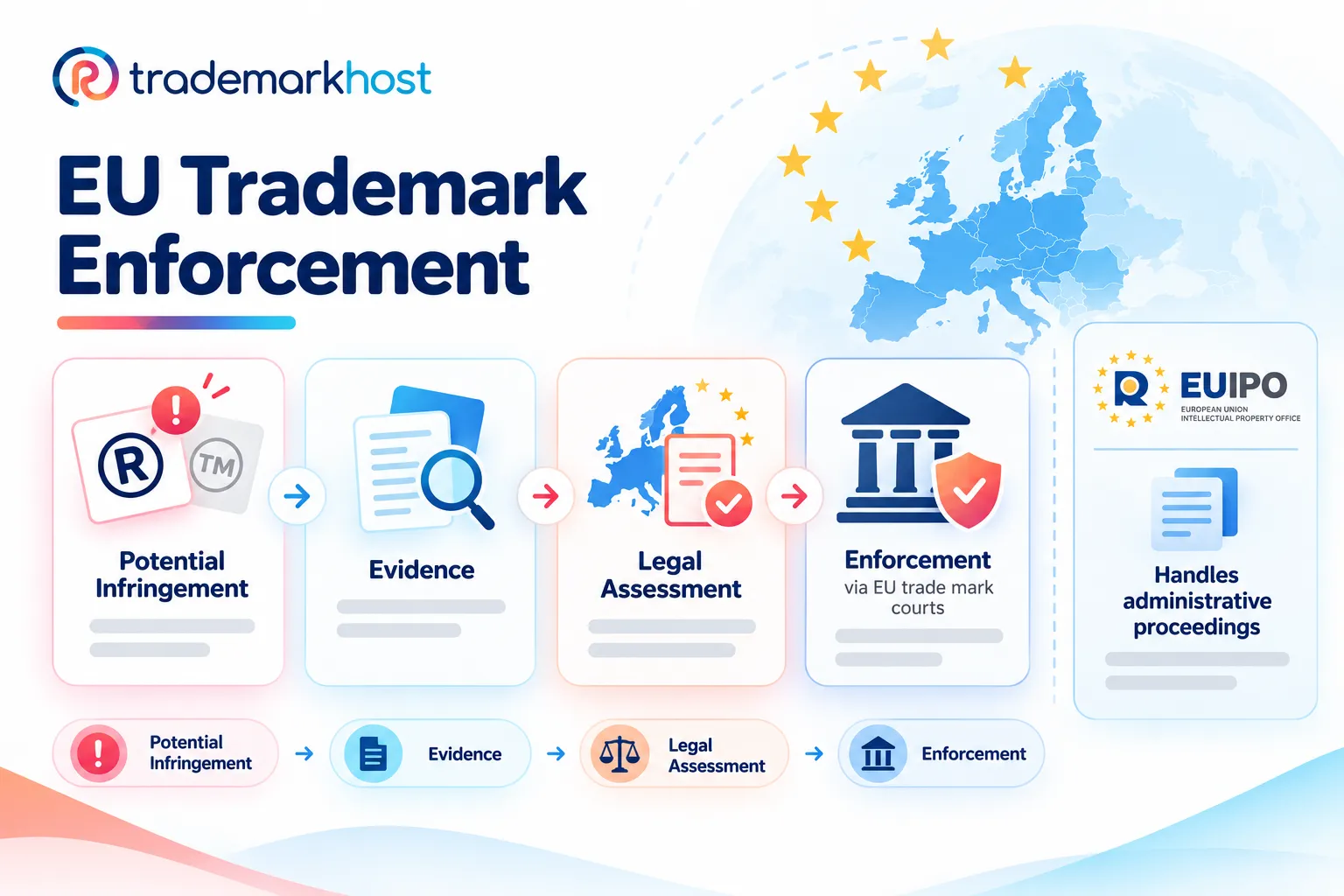
EU trademark infringement law provides EU-wide protection, while infringement cases are generally handled by designated courts in EU Member States. These courts have the authority to handle disputes involving EU trademarks.
EUIPO handles administrative proceedings such as oppositions and certain cancellation actions, while infringement proceedings are generally brought before the competent EU trade mark courts.
Here’s how enforcement generally works:
- Filing a claim with the appropriate EU trade mark court
- Requesting injunctions to stop the infringing activity
- Seeking damages or compensation
- Initiating border measures against counterfeit goods
The approach and outcome vary depending on the jurisdiction and the nature of the infringement.
What counts as trademark infringement in the EU?
Trademark infringement in the EU is broader than many people expect. It’s not just about identical copying.
Similarities between marks may lead to infringement where they create a likelihood of confusion. Courts often look at the overall impression, not just one element.
They consider:
- Similarity of marks (visual, phonetic, conceptual)
- Type of goods or services involved
- Target audience and likelihood of confusion
- Strength and reputation of the original trademark
What are the penalties and trademark infringement damages EU businesses face?
The damages are intended to compensate the rights holder for the actual prejudice suffered as a result of the infringement.
Depending on the case, courts may consider:
- Lost profits suffered by the trademark owner
- Profits made by the infringer
- An appropriate licensing fee
- Other harm suffered by the trademark owner
In some cases, courts also order:
- Injunctions prohibiting continued infringement
- Destruction of counterfeit goods
- Public disclosure of the judgment
The financial and reputational cost can be severe. That’s why businesses should take enforcement seriously from day one.
How can you prove EU Trademark Infringement?
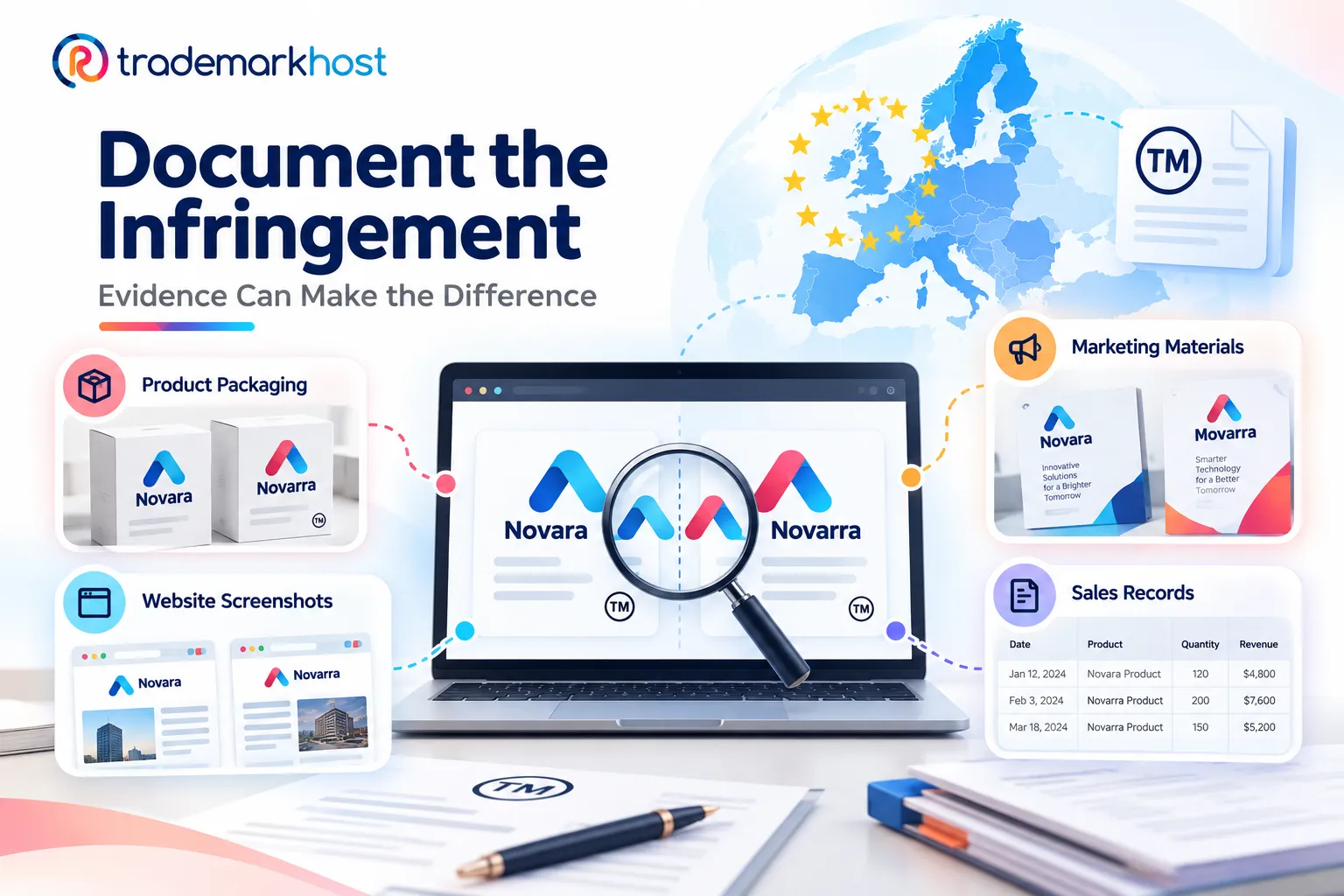
Proving EU Trademark Infringement requires evidence that your trademark rights exist and that they’ve been violated.
To bring an EUTM infringement claim, the claimant must establish the relevant EU trade mark rights and show that the challenged use falls within the scope of those rights.
Depending on the infringement claim, relevant factors may include:
- Use of an identical or similar sign in the course of trade
- The goods or services involved
- Likelihood of confusion, where required
- For reputed marks, unfair advantage or detriment to distinctive character or reputation
Evidence may include:
- Product packaging comparisons
- Marketing materials
- Website screenshots
- Sales records
Strong documentation can determine whether your case stands or falls.
How can you prevent trademark infringement in the EU?
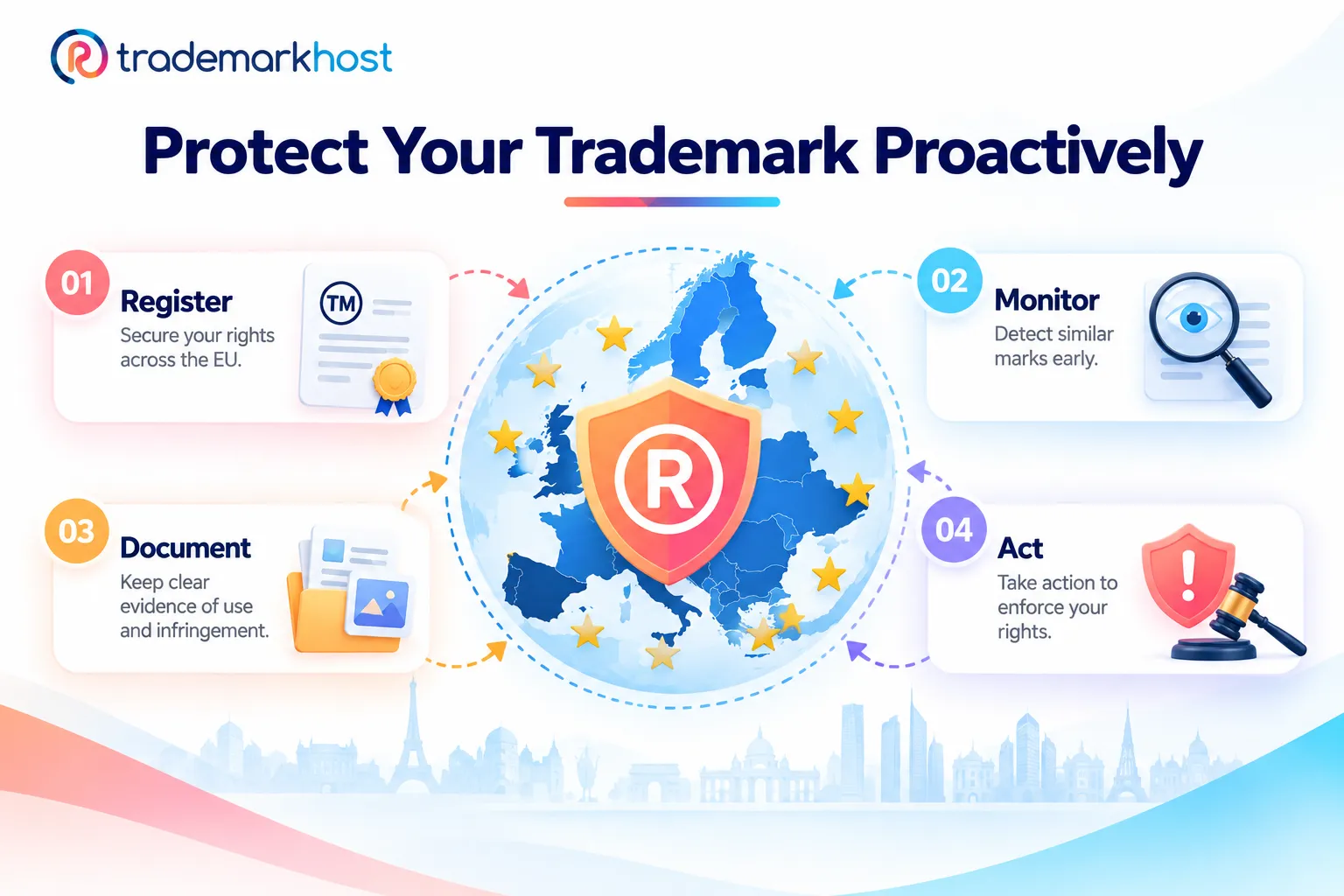
Preventing infringement is usually more efficient than resolving disputes later. Securing your rights early can reduce the risk of conflicts later on
Start with proper trademark registration in the European Union, which can provide unitary trade mark protection throughout all EU countries.
Then take these steps:
- Monitor the market regularly
- Set up trademark watch services
- Act quickly when you spot misuse
- Keep records of your brand usage
You should also ensure your EU trademark filing is done correctly from the start. An inaccurate specification of goods and services can leave important aspects of your business outside the scope of your registered protection.
Why is the European Union Trademark (EUTM) important for protection?
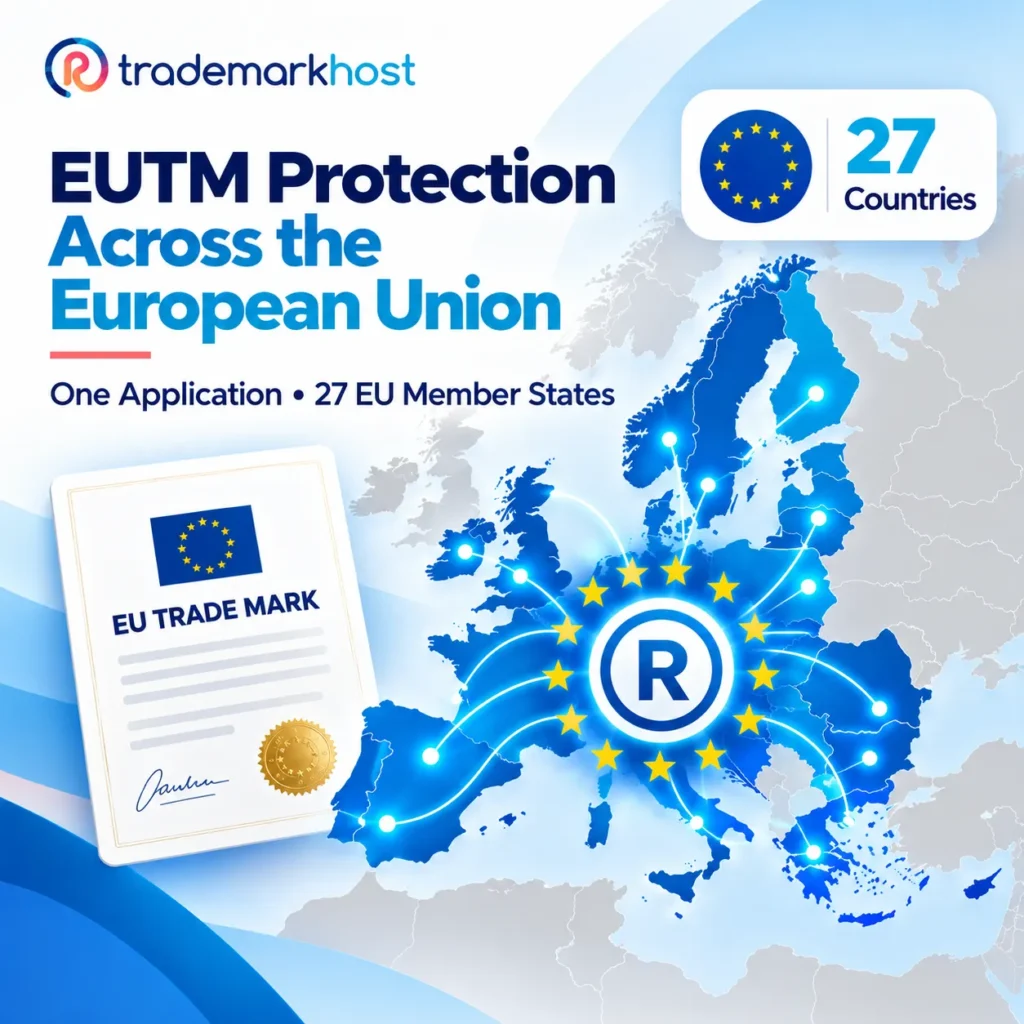
The European Union trade mark (EUTM) provides a single registration that covers all EU Member States. This can offer significant administrative advantages compared with filing separate national applications in multiple Member States.
With one application, you gain:
- Protection across multiple markets
- Simplified management of your trademark
- Potential cost efficiency for multi-country protection
Although an EUTM is a unitary right, infringement proceedings are brought before the competent EU trade mark courts, and applicable procedures and remedies can involve national law.
What should you do if someone infringes your trademark?
If you discover infringement, respond without delay. Prompt action can help preserve evidence, limit potential harm, and support an effective enforcement strategy.
Here’s a practical approach:
- Preserve relevant evidence
- Assess the alleged infringement
- Consider a cease-and-desist letter or negotiated resolution
- Seek legal action where appropriate
In many cases, disputes can be resolved without going to court. But if not, formal enforcement proceedings may be necessary.
What role does reputation play in EU trademark cases?
The reputation of the trademark significantly expands protection under EU law. An EUTM with a strong reputation may also be protected against similar marks used for unrelated goods or services.
EU law provides broader protection for EUTMs that have acquired a reputation in the Union, subject to specific legal requirements. This includes preventing dilution or unfair advantage.
For example, a strong brand may be able to stop a similar mark from unfairly benefiting from its reputation.
This level of protection is a key strength of the EU system, but it requires clear evidence of market recognition.
Why choose TrademarkHost for global trademark protection?
Cross-border enforcement in the EU involves multiple legal systems, which makes experienced guidance essential. At TrademarkHost, we support businesses in protecting their brands across multiple jurisdictions.
We help clients with EUIPO filings, WIPO registrations, and national offices worldwide. Our trademark services cover regions like the U.S., EU, UK, China, UAE, and Australia.
Here’s how we support brand owners:
- Strategic trademark filing and portfolio planning
- Assistance with enforcement and disputes
- Guidance on international protection systems
- Ongoing monitoring and advisory
We focus on clear, practical steps to help businesses protect and manage their trademark rights effectively.
Conclusion
EU Trademark Infringement isn’t just a legal concept; it’s a real business risk that can impact your brand’s growth and reputation. The earlier you understand how the system works, the better prepared you are to protect your rights.
From registration to enforcement, every step matters. If you’re serious about safeguarding your brand across the European Union, taking action now can save you time, money, and stress later.
At TrademarkHost, we help businesses secure and defend their trademarks worldwide with practical, reliable support. If you need guidance, getting the right support early can make a real difference.
FAQs
What is considered trademark infringement in the EU?
EU trademark infringement may occur when an unauthorized third party uses an identical or similar sign in the course of trade in circumstances that interfere with the proprietor’s exclusive rights.
Can I enforce my EU trademark in all Member States?
An EUTM provides protection throughout the EU, but infringement actions are brought before designated EU trade mark courts, with jurisdiction depending on the circumstances of the case.
Do I need to register a trademark before claiming infringement?
An EUTM infringement claim is based on rights conferred by an EU trade mark registration. However, other rights such as national trademark rights or certain rights in unregistered signs may provide separate remedies depending on the applicable law.
How long does an infringement case take in the EU?
It varies. Some cases resolve in months, while others take years, depending on complexity and jurisdiction.
Can I claim damages for trademark infringement in the EU?
Yes. Depending on the circumstances and applicable law, damages may take into account lost profits, unfair profits made by the infringer, other prejudice suffered by the rights holder, or an appropriate royalty-based amount.