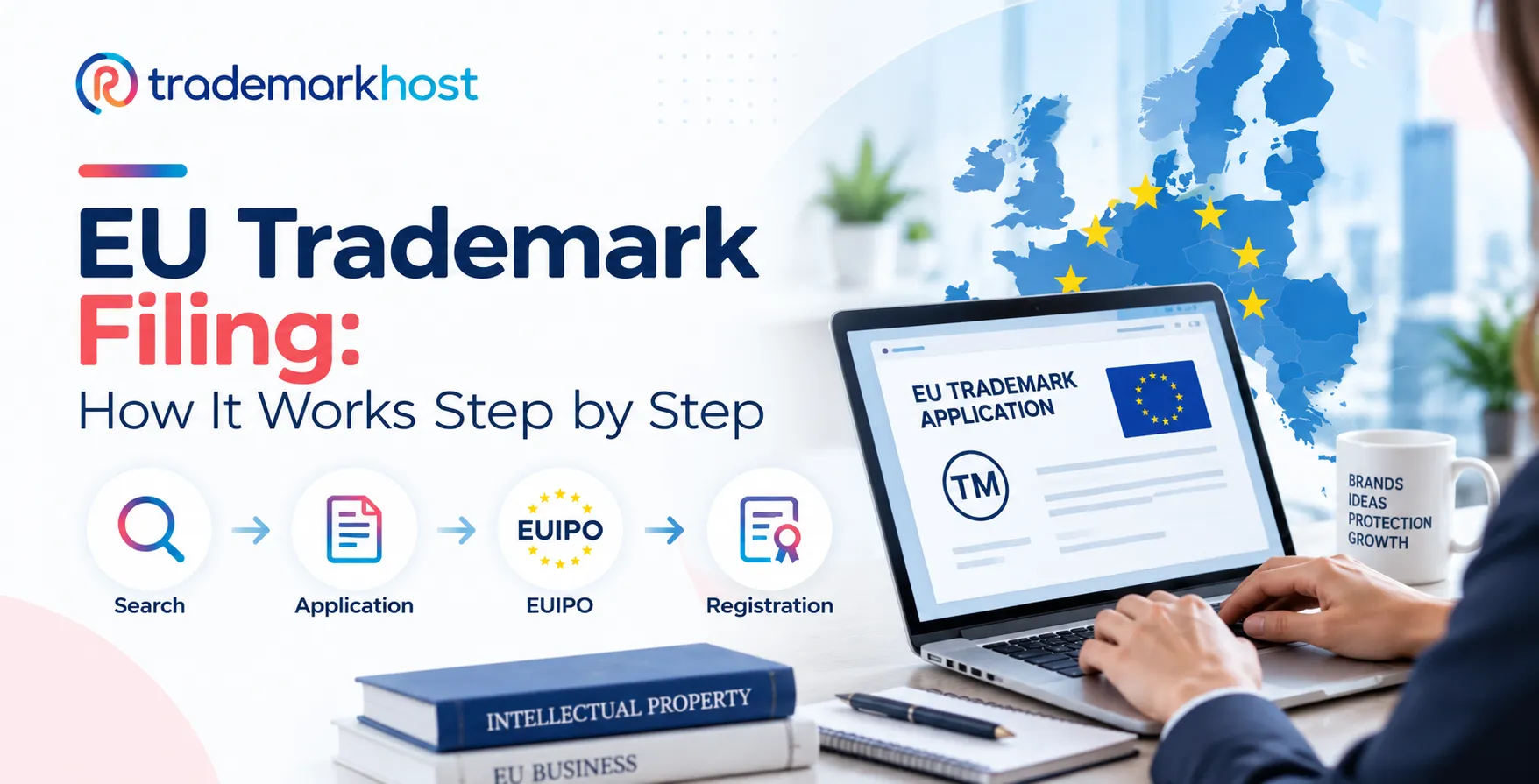
EU Trademark Filing: How It Works Step by Step
Trademark filing is a structured legal procedure that grants brand owners exclusive rights for their intellectual property. An EU trademark provides unified protection through a single registration. This system is efficient and cost-effective for businesses operating in multiple EU markets. You should understand each step of the EU trademark filing process for an effortless experience.
In this article, we will explain the complete procedure of filing a trademark application in Europe. We will discuss how professional services can make this process easier for you. Moreover, we’ll recommend TrademarkHost, a trusted platform for trademark protection services worldwide.
What is an EU Trademark Filing?
An EU Trademark filing is a procedure in which business owners submit applications to obtain a registered trademark. They do it to protect their brand names, logos, and slogans. A properly prepared application can help reduce the risk of delays, objections, and unnecessary expenses, although it cannot eliminate them entirely.
The European Union Intellectual Property Office (EUIPO) manages this process. Once approved, the trademark is valid in all current EU member states. No separate national registrations are required. EU trademark filings also support digital enterprises targeting European consumers.
Trademark protection safeguards your brand identity and strengthens brand recognition. Trademarkhost’ EU trademark registration services give you exclusive rights to use the mark across the European Union for the registered goods and services.
How Does the EU Trademark Filing Process Work?
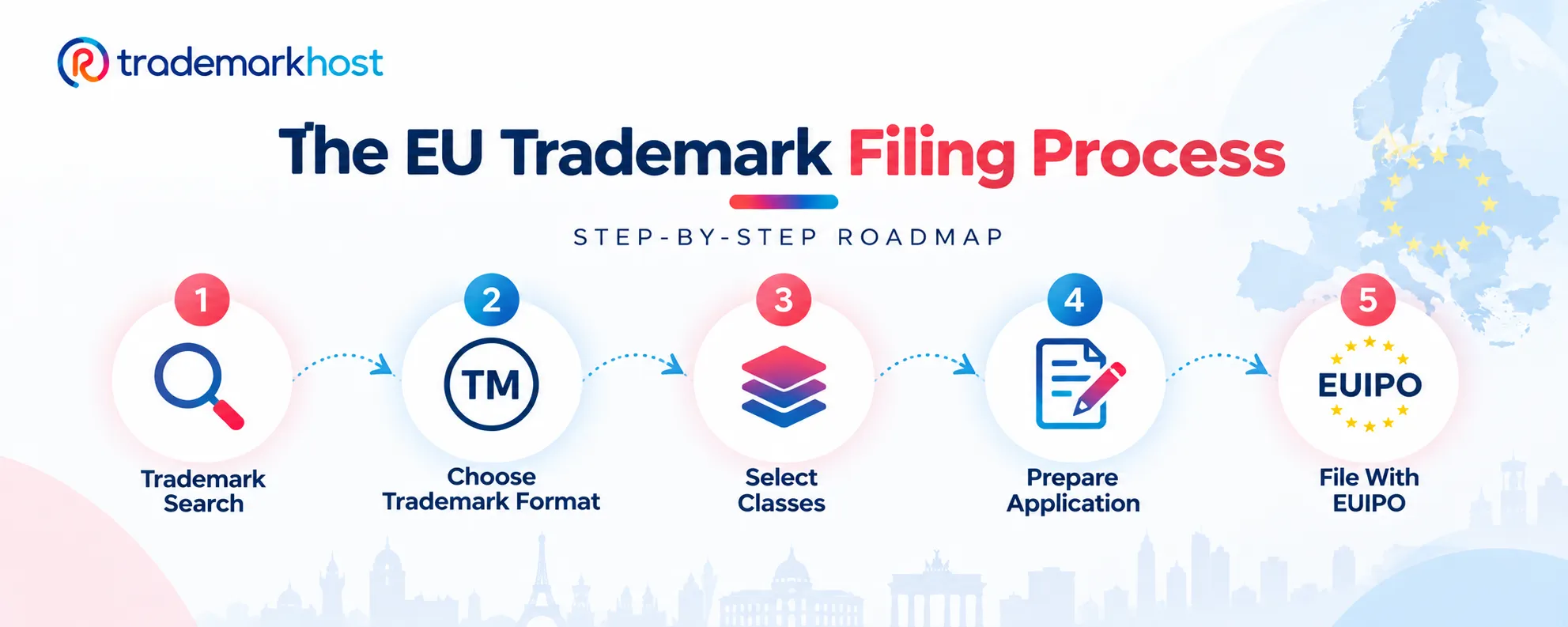
The EU trademark filing process involves multiple structured steps. Each step is important, although not every step is mandatory in every case. The application must meet EUIPO’s formal requirements to be considered complete.
Step-by-step procedure for filing an EU trademark is as follows:
Conducting a Trademark Availability Search
First, you should conduct a trademark availability search. Businesses operating in the same or related industries may use similar names or slogans, which can create confusion among consumers. That is why you should verify that no one is using your trademark already.
A complete search finds:
- Existing identical trademarks
- Similar registered marks
- Pending applications
- Conflicting trade names
Defining Trademark Format
Then, you should decide which type of trademark you want to protect. Official EUIPO fees primarily depend on the number of classes selected, not on the type of trademark. So, choose according to your budget and the brand’s needs.
Common formats are:
- Word marks
- Figurative marks
- Combined word and logo marks
- Three-dimensional marks
- Sound marks
Word marks generally provide broader protection because they cover the wording itself regardless of its stylization or font. In contrast, figurative marks protect the specific visual representation of the mark.
Selecting Appropriate Trademark Classes
Every applicant selects EU trademark classes for their goods or services. The Nice Classification system categorizes both goods and services into different classes. You select the appropriate classes based on your goods and/or services. There are 34 classes for goods and 11 classes for services.
For example:
- Class 25: Clothing
- Class 35: Advertising
- Class 41: Education
- Class 42: Software and IT services
Official EUIPO fees increase as additional classes are included in the application.
Preparing the EU Trademark Application
After defining the necessary components, application preparation comes. At this stage, you fill out the application online in any official EU language. A second procedural language must also be selected. This language is used for potential disputes.
A standard EU trademark application includes:
- Applicant’s legal name
- Business address
- Trademark representation
- List of goods and services
- Chosen classes
- Language selection
Filing the Application with EUIPO
An EU trademark filing is done through an online EUIPO portal. After carefully reviewing your application and ensuring all required information is included, submit it through the EUIPO portal. At this stage, the official application process begins.
After submitting the application and paying the required fee, you will receive an application number, a filing date, and a payment confirmation. The filing date establishes priority rights. It is legally significant in case of conflicts. The application will not proceed unless the required official fees are paid within the applicable time limits.
What Is the Cost of Filing an EU Trademark?
You should understand the costs involved in filing an EU trademark to plan your budget effectively. The total cost depends on several factors, such as the number of classes, professional attorney fees, and maintenance charges.
Standard official fees include:
- First class: Basic official fee
- Second class: Additional official fee
- Third and each additional class: Additional official fee
You should also consider:
- Search costs
- Filing fees
- Opposition defense costs
- Renewal expenses
Formal Examination by EUIPO
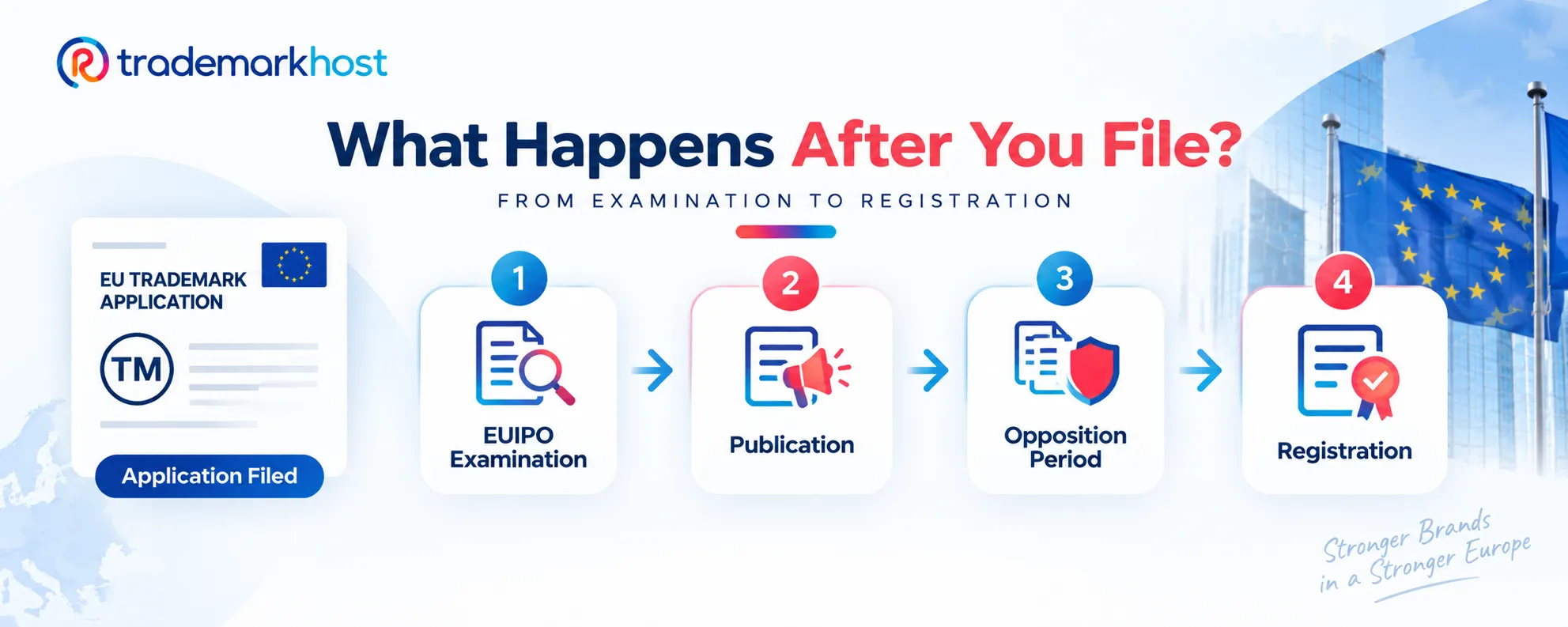
Once the official filing fee is received, EUIPO begins examining the application. EUIPO will examine your application for compliance with legal and procedural requirements.
This review verifies:
- Completeness of documents
- Payment confirmation
- Classification accuracy
- Technical compliance
The EUIPO also examines whether the mark complies with EU trademark regulations.
- Lack of distinctiveness
- Descriptive terms
- Misleading marks
- Public policy violations
If objections arise, EUIPO issues an examination report (sometimes referred to as an office action) outlining the objections. You will be given a specified period to respond. Failure to reply will lead to application rejection.
Publication in the EU Trademark Bulletin
If the application passes examination, it is published in the European Union Trade Marks Bulletin.
Following publication, third parties have three months to file an opposition. Monitor this period and be aware of any objections.
Opposition Proceedings
If an opposition is filed against your application, you should hire a professional lawyer to handle it. Your attorney will submit legal evidence and written arguments. A significant number of disputes are resolved through coexistence agreements. Others proceed to formal decisions.
Registration and Certificate Issuance
If no opposition is filed or if disputes are resolved successfully, the trademark proceeds to registration.
EUIPO issues:
- Registration certificate
- Official publication notice
- Trademark number
Once registered, the trademark owner obtains exclusive rights to enforce the mark. Those rights take effect upon registration, although the registration has effect from the filing date.
Duration and Renewal of Protection
The EU trademark is valid for ten years. Renewal is available for an additional ten-year period.
Renewal needs:
- Payment of renewal fees
- Timely submission before expiry
Post-Registration Enforcement and Use
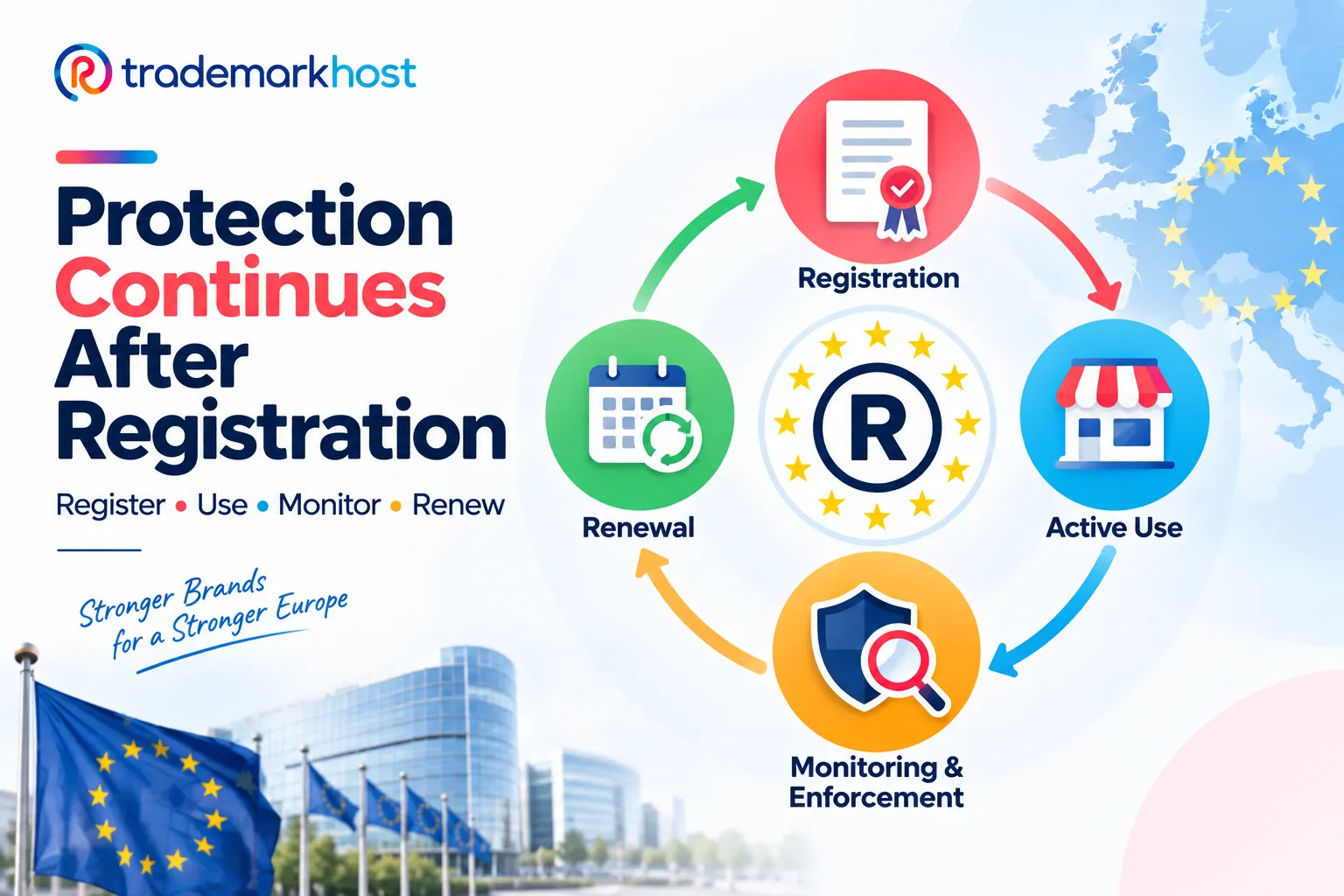
Registration alone is insufficient. Active use is mandatory. If you do not use a trademark for five consecutive years, it becomes vulnerable to cancellation.
Rights holders must:
- Monitor infringements
- Enforce against counterfeiters
- Act against domain abuse
- Address online misuse
Some business owners follow this process and get their trademark registered. On the other hand, some take help from professional attorneys to file their applications. Professionals also follow this procedure, but with great expertise.
Working with experienced trademark attorneys can make the filing process more efficient and reduce the risk of errors, particularly when responding to objections or oppositions that may extend the overall timeline.
How Does TrademarkHost Streamline Trademark Filing for EU Businesses?
TrademarkHost provides comprehensive trademark protection services worldwide. Our firm supports clients across emerging markets in different countries.
Our services include:
- Global trademark searches
- EU trademark filing and prosecution
- Opposition and litigation support
- Portfolio management
- International registrations
We combine legal precision with commercial insight. Our specialists help ensure regulatory compliance and align trademark strategies with your business objectives. We protect brand assets throughout their lifecycle. We are committed to a proactive, transparent, and client-centric approach. We provide trademark registration services in accordance with the laws and procedures of the jurisdictions where you seek protection.
For example:
- European Union trademark protection through EUIPO (European Union Intellectual Property Office)
- U.S. trademark protection through the USPTO (United States Patent and Trademark Office)
- Trademark registration in China, the UAE, and Australia through their respective national intellectual property offices
Conclusion
In conclusion, EU trademark filing is a multi-stage legal process. Each step requires technical accuracy and strategic planning. From clearance searches to registration and enforcement, every phase influences long-term brand security.
Businesses seeking long-term growth in Europe should prioritize a well-planned trademark protection strategy. Proper EU trademark filings establish legal certainty and competitive advantage in the European market.
FAQs
What is an EU trademark filing?
EU trademark filing is a legal process that allows businesses to register a trademark in all EU member states through a single application.
Which authority handles EU trademark applications?
All EU trademark applications are examined and, if approved, registered by the European Union Intellectual Property Office (EUIPO).
How long does EU trademark registration take?
If no objections or oppositions arise, registration typically takes around four to six months, although processing times may vary.
What is the cost of filing an EU trademark?
The cost depends on the number of trademark classes selected and any professional service fees involved.
How long is an EU trademark valid?
An EU trademark is valid for ten years and can be renewed indefinitely for additional ten-year periods.