A Beginner’s Guide to the European Union Trade Mark (EUTM)
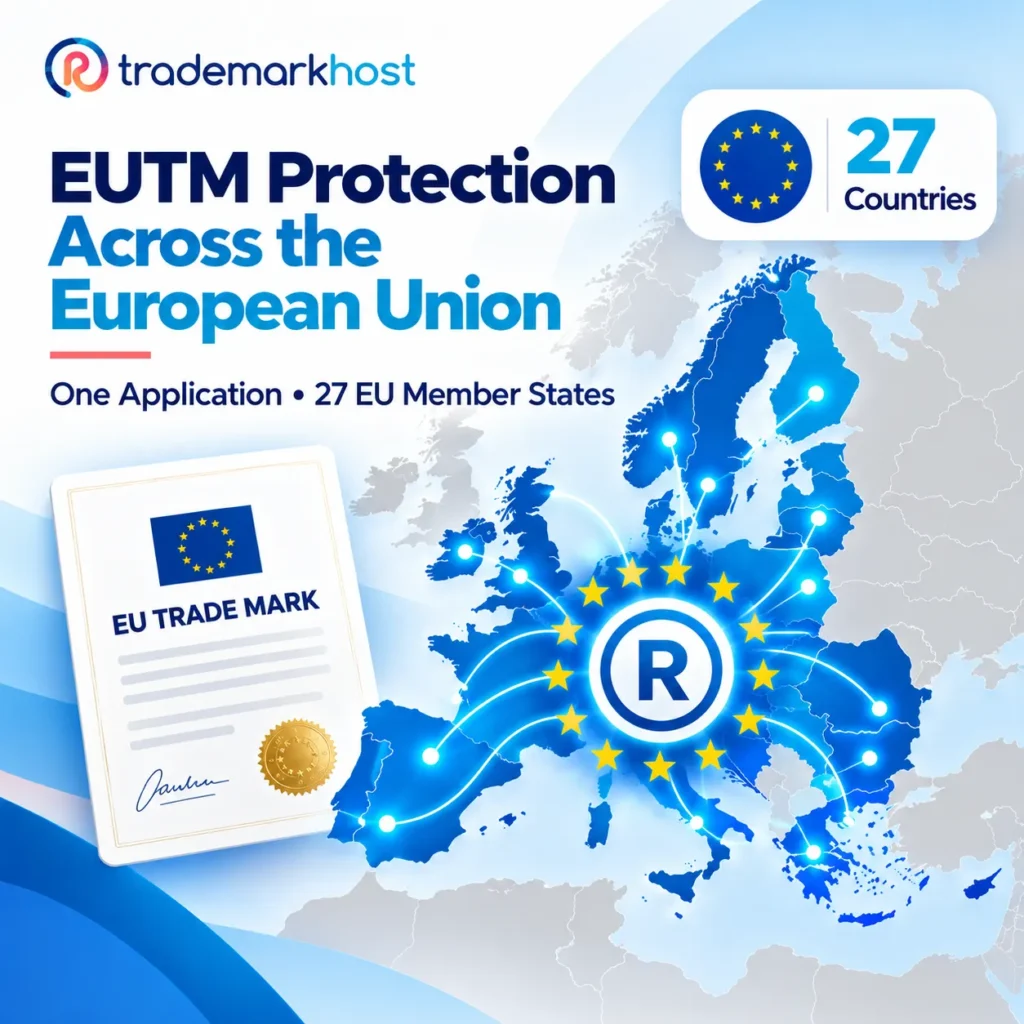
If you want to protect your brand across Europe, the European Union Trade Mark (EUTM) offers a practical solution. It allows a company to secure trademark rights in all Member States of the European Union with a single registration. Instead of filing separate national applications, you can file one EUTM application covering all EU Member States.
For businesses focused on internationalization, this matters a lot. Whether you’re a startup in the U.S., a growing company in the UAE, or an established brand in Australia, the European Union offers a large and competitive market. Strong intellectual property protection can build brand confidence and support long-term business expansion.
Let’s break down how it works and what you need to know before applying.
What is a European Union Trade Mark (EUTM) and How Does It Work?

An EUTM is a single trademark registration that covers all EU Member States. It is managed by the European Union Intellectual Property Office (EUIPO), the official authority responsible for managing EU trademarks.
Once registered, an EUTM provides protection across all current EU Member States for the goods and services covered by the registration.
Here’s what makes it powerful:
- One application covers all EU countries
- One application uses EUIPO’s centralized fee structure
- Renewals follow a unified process
- Protection applies uniformly across the European Union
The system was previously known as the Community Trade Mark (CTM). Some businesses still refer to it as the “European Union Community trademark,” but the official name today is the European Union Trade Mark (EUTM). While the name has changed, the concept remains the same: unified trademark protection for the EU market.
For businesses seeking protection across several EU countries, an EUTM may be more efficient than multiple national applications.
Why Should Businesses Consider European Trademark Protection?
The European Union has a market of roughly 450 million consumers. Strong European trademark protection helps safeguard your registered brand name, logo, or slogan across all EU Member States.
This is especially important for:
- E-commerce businesses selling across borders
- Technology companies expanding into new markets
- Corporations building global brand portfolios
- Manufacturers exporting products to Europe
Without registration, your business may face disputes. Another party could apply for a similar mark before you do. That can block your expansion or lead to legal conflict.
A registered EUTM gives you:
- Exclusive rights to the registered mark
- Legal grounds to oppose similar applications
- The ability to take enforcement action
- Stronger negotiating power with distributors and partners
In short, it protects your identity and supports brand growth. For businesses serious about expanding in Europe, understanding the process of trademark registration in the European Union is a critical first step.
How Do You Conduct a European Union Trademark Search?

Before filing, conducting a trademark search is highly recommended. It helps you check whether similar marks already exist in the EUIPO database.
The European Union Intellectual Property Office maintains a public database. This database allows applicants to search existing trademarks by name, owner, or class.
Skipping this step can be costly. If your mark conflicts with an earlier registration, your application may face opposition.
A proper search should review:
- Identical trademarks
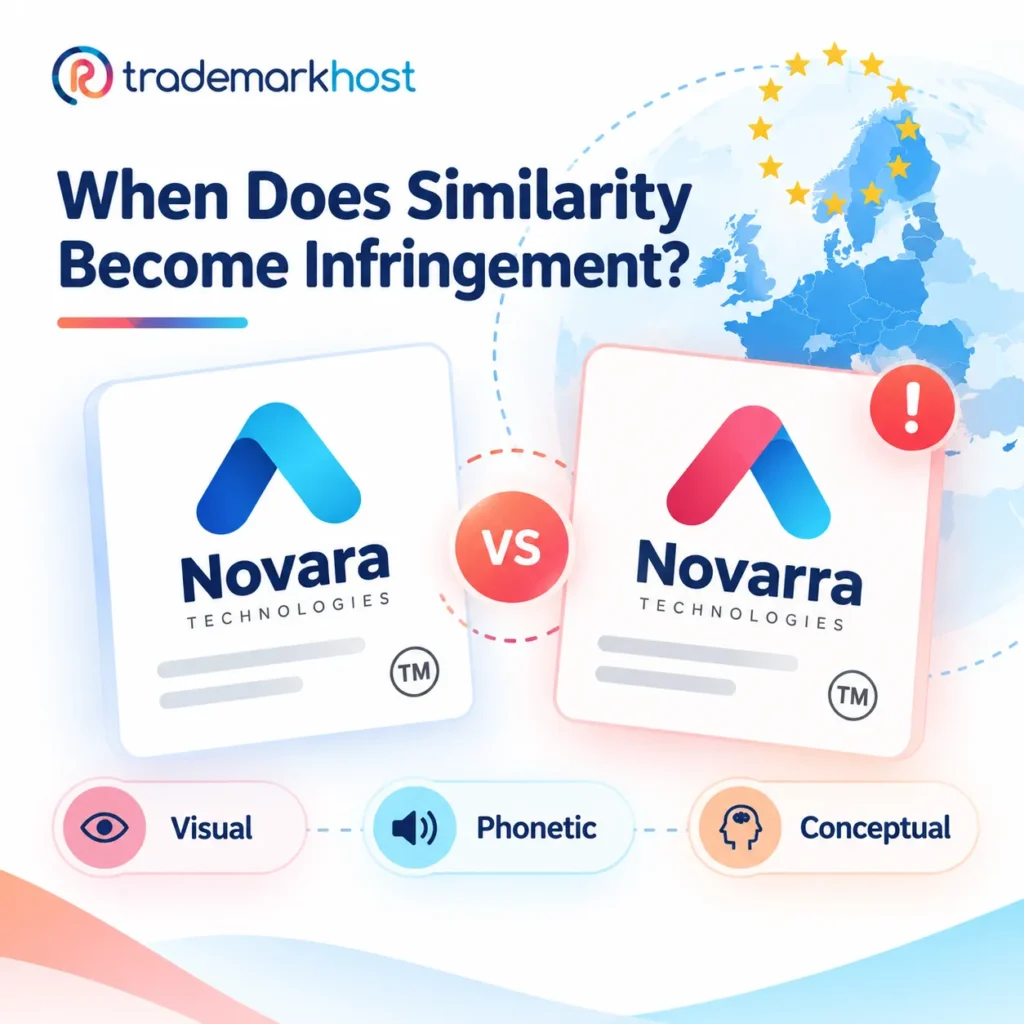
- Similar spellings
- Phonetically similar names
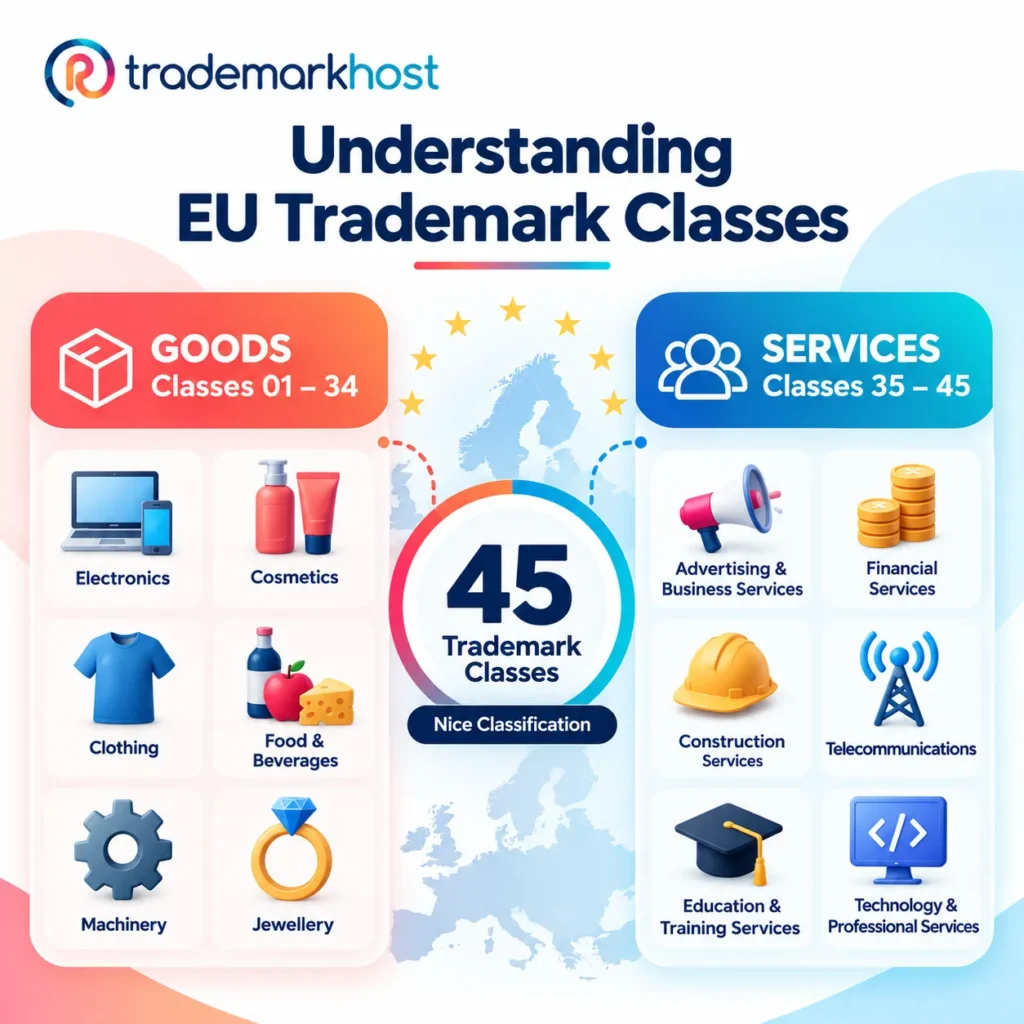
- Related goods or services classes
At TrademarkHost, we conduct detailed searches before filing. We analyze risk levels and explain potential conflicts clearly. This helps you understand potential conflicts before proceeding with an application.
What Is the Process for a European Union Trademark Application?
The application process is structured but manageable. It starts with filing online through the EUIPO.
Here’s how it typically works:
- Submit the application with your mark and selected classes
- EUIPO examines formal requirements
- The mark is reviewed for absolute grounds
- Applicants may request an EU search report for informational purposes
- The application is published
- Third parties may file opposition
If no successful opposition arises, registration is granted.
The European Union Intellectual Property Office (EUIPO) examines issues such as descriptiveness, lack of distinctiveness, or conflict with public policy. However, it does not examine earlier conflicting marks (relative grounds). Conflicts with earlier rights must be raised by third parties through opposition.
The application can be submitted in any official language of the European Union. However, applicants must also select a second language from EUIPO’s five procedural languages: English, French, German, Italian, or Spanish.
Once registered, an EUTM lasts ten years and can be renewed indefinitely in ten-year periods. However, after five years, it may become vulnerable to revocation for non-use if it has not been put to genuine use and no proper reasons for non-use exist.
Is the EUTM Valid in All EU Countries?
Yes, an EUTM registration protects your trade mark across all EU countries under one registration. That includes countries like Germany, France, Italy, Spain, Poland, and many others.
However, it does not cover non-EU European countries such as Switzerland or the United Kingdom. You must file separate applications in those jurisdictions.
When a new country joins the EU, existing EUTMs generally extend to the new Member State, subject to applicable enlargement rules. That adds long-term value to the registration.
For businesses expanding across Europe, this unified system simplifies portfolio management.
What Happens If Someone Opposes Your Application?
If someone believes your mark conflicts with theirs, they can file an opposition after publication. The opposition is handled by the European Union Intellectual Property Office.
This stage can involve evidence, legal arguments, and negotiations. Some cases settle. Others proceed to formal decisions.
Common opposition grounds include:
- Likelihood of confusion
- Similar goods or services
- Earlier registered rights
- Reputation of an existing brand
Handling opposition requires strategy. At TrademarkHost, we support clients through the full process, from filing to defense. Our services focus on clear communication and practical solutions.
How Long Does It Take to Register a European Union Trade Mark (EUTM)?
Registration can take several months when the application proceeds without objections or opposition. More complex cases may take considerably longer. More complicated applications may require extra time to reach registration. Delays happen if objections arise or documentation is incomplete.
The timeline includes:
- Examination period
- Publication period
- Opposition window
If opposition occurs, the process can extend significantly.
Early filing can be valuable when trademark registration forms part of a planned product launch or market entry.
How Is the EUTM Different from National Filings?

The main difference is scope. A national trademark covers one country. The European Union trademark covers all EU Member States.
Here’s the trade-off:
- National filing: lower initial risk, limited territory
- EUTM: broader protection, but one conflict can affect the entire application
Because the EUTM has a unitary effect, an opposition based on earlier rights in even one EU Member State can block the entire application. That’s why careful preparation matters.
For some businesses, a mixed strategy works best. Others benefit from filing through the Madrid System under WIPO for broader international coverage.
We help clients evaluate these options based on business goals.
Why Choose TrademarkHost for Your European Union Trade Mark (EUTM)?
We understand that trademark law can feel complex. Our goal is to make it practical and clear.
At TrademarkHost, we handle global trademark matters involving EUIPO, WIPO, and national intellectual property offices. We work with startups, growing companies, and established corporations.
Clients choose us because:
- Detailed search analysis
- Accurate preparation and filing of applications
- Strategic management of oppositions and responses
- Global filing strategies tailored to your markets
- A clear focus on real-world outcomes
That means protecting your intellectual property while supporting business growth.
Our team supports clients from the U.S., EU, UK, China, UAE, Australia, etc. No matter where you operate, we align your trademark strategy with your expansion plans.
Final Thoughts
The European Union Trade Mark (EUTM) offers a powerful way to protect your brand across the European Union. With one registration, you can secure protection across every EU Member State. For companies expanding internationally, that level of coverage supports stability, consumer trust, and long-term value.
Still, success depends on careful preparation. A proper European Union trademark search, accurate classification, and strategic filing all matter. Mistakes can delay or block registration.
At TrademarkHost, we help businesses navigate the full process with clarity and confidence. If you’re planning to enter the European market or strengthen your brand protection, contact us to discuss your EUTM filing strategy.
FAQs
How long does a European Union trademark last?
An EU trade mark is valid for ten years from the date of filing. The registration can be renewed every ten years.
Can I file a European Union trademark application without being in the EU?
Yes. Applicants do not need to be based in the EU to apply for an EUTM. However, EUIPO representation requirements may apply depending on where the applicant is established
Does an EUTM protect my brand worldwide?
No, it only protects your mark in EU Member States. To protect your mark outside the EU, you may need national applications or international registration through the Madrid System.
What types of marks can be registered?
You can register word marks, logos, slogans, and even certain non-traditional marks. The mark must be unique enough to identify your brand and should not simply describe your goods or services.
What is the role of the European Union Intellectual Property Office?
The European Union Intellectual Property Office is responsible for examining, publishing, and registering EUTMs. It also manages oppositions and maintains the official database.